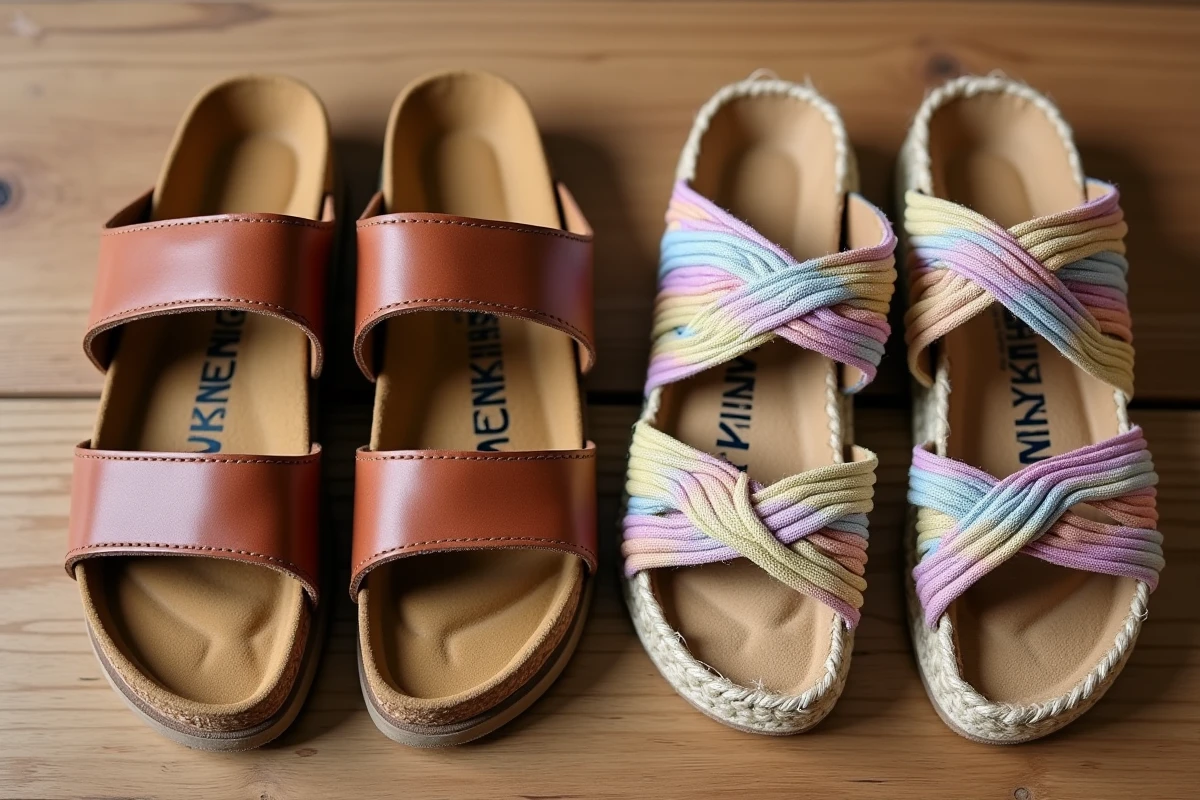
The anatomical insole is the primary differentiating factor between Bayton and Birkenstock, well before price or design. Both brands claim to offer an ergonomic footbed, but the construction differs in ways that most consumer comparisons overlook.
Footbed Construction: Solid Cork vs. Reconstituted Cork
Birkenstock uses a core of natural cork mixed with latex in its insoles, pressed and shaped to gradually conform to the foot’s morphology. This material deforms under the influence of body heat and pressure, which explains the break-in period often mentioned by users.
Bayton also incorporates cork, but in a different proportion and process. The French brand favors an assembly where the cork is reconstituted and combined with technical foams. The result offers immediate comfort, without an adaptation phase, at the cost of a more limited long-term molding capacity.
We observe that this difference in construction has a direct consequence on the arch support. With Birkenstock, the support refines over time and becomes almost personalized after several weeks of wear. With Bayton, the support remains constant but less progressive. For prolonged daily use or walking, this distinction matters.
An article detailing the differences between Bayton and Birkenstock confirms that the choice of insole conditions the entire wearing experience, far beyond the first impression in-store.
Materials of Straps and Outsoles: Leather, Synthetic, and Durability
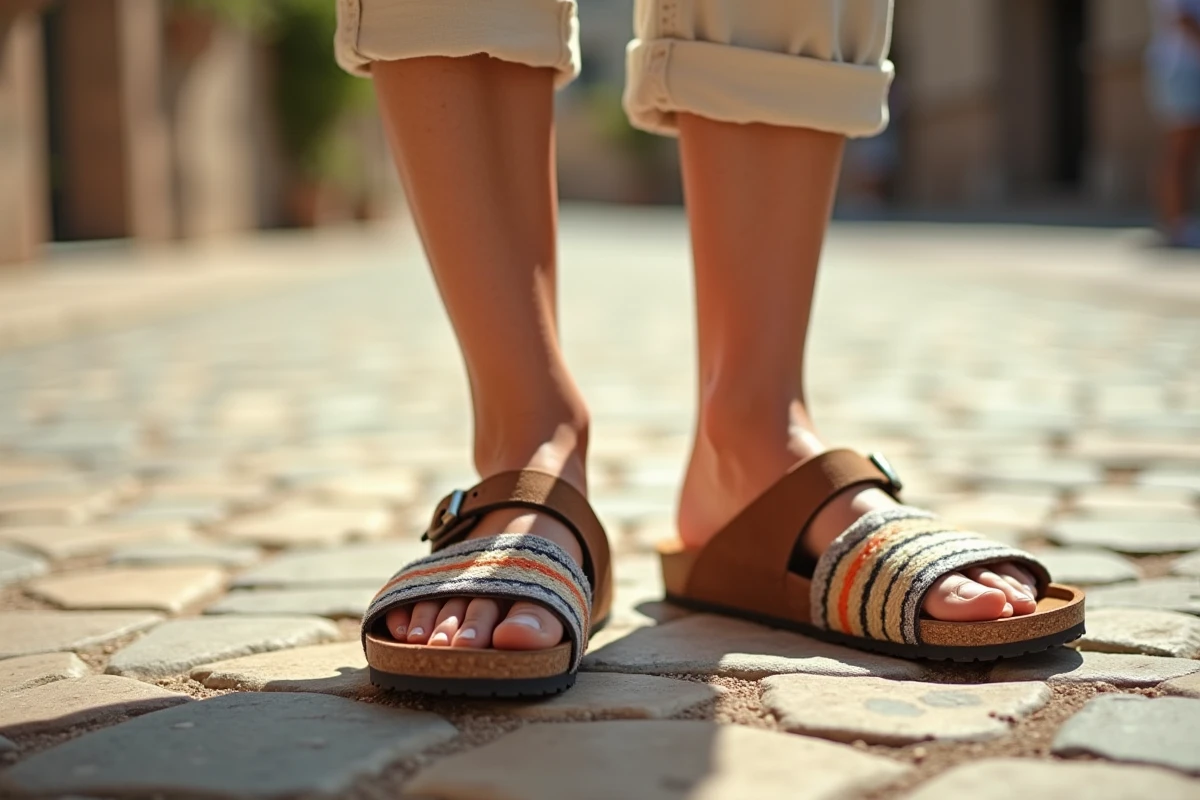
The straps on classic Birkenstock models (Arizona, Boston, Madrid) are offered in smooth leather, suede, or Birko-Flor, a proprietary synthetic material lined with felt. The leather comes from audited tanneries, and the brand regularly communicates about the traceability of its supplies.
Bayton offers straps in leather, synthetic materials, and on certain lines, in vegan-labeled materials. The brand emphasizes design and variety of finishes, but the discourse on material traceability is less structured than that of Birkenstock.
Outsole and Abrasion Resistance
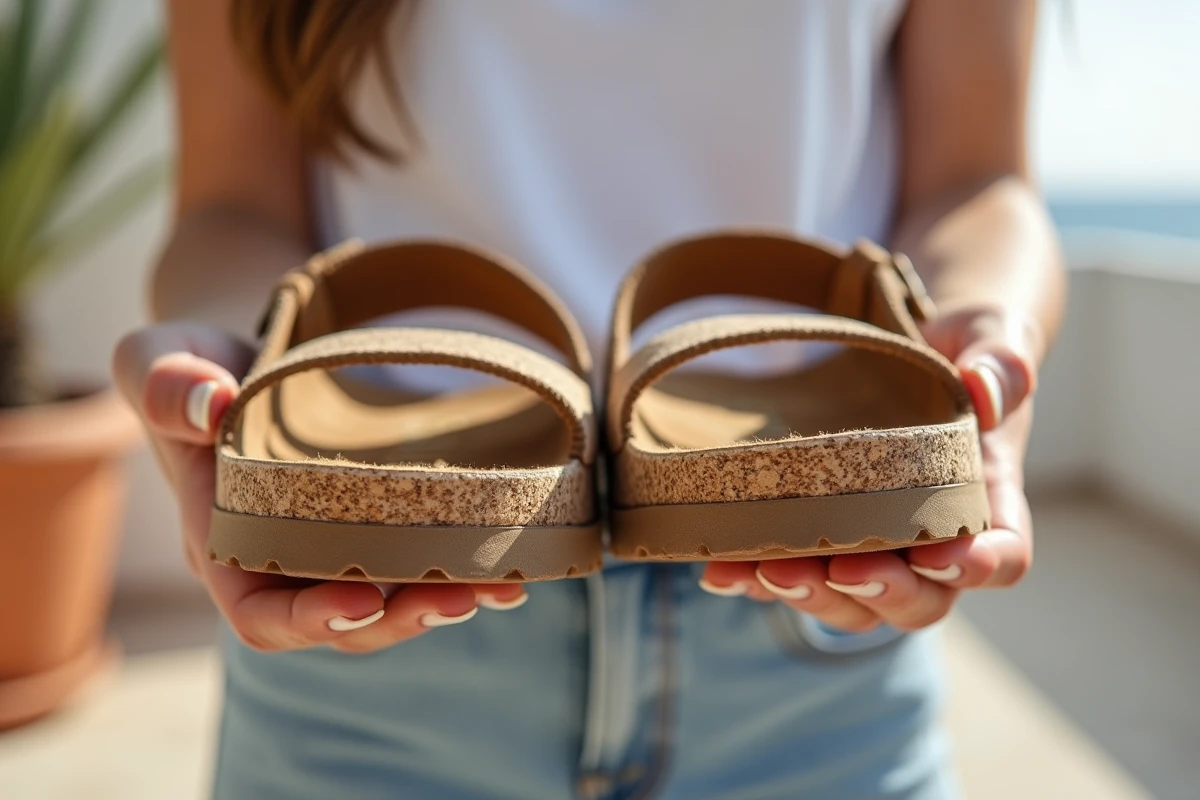
Birkenstock equips the majority of its models with an EVA outsole, a lightweight and abrasion-resistant material. On walking models, the outsole is reinforced with a more pronounced tread pattern.
Bayton also uses EVA or TPR depending on the ranges. The abrasion resistance heavily depends on the chosen model. We recommend checking the hardness of the outsole before purchase, as entry-level Bayton models wear out noticeably faster on abrasive surfaces like concrete or outdoor tiles.
Distribution Network and Shopping Experience: An Underestimated Gap
Birkenstock benefits from a dense distribution network: dedicated physical stores, corners in department stores, multi-brand retailers, and international online platforms. This physical presence facilitates trying on, size advice (Birkenstock sizes follow a German fit, often different from standard French sizing), and in-store returns.
Bayton remains a more confidential brand in physical distribution. Purchases are primarily made online, via the official store or a few partner distributors. Direct consequence: trying on before purchase is rarely possible, and returns go through a postal process.
- Birkenstock: in-store fitting, on-site size advice, simplified in-store returns
- Bayton: majority online purchases, size guide on the site, returns by post
- The choice of the right size is critical for both brands, as a poorly sized anatomical footbed loses all its ergonomic benefits
This point may seem secondary, but it strongly influences post-purchase satisfaction. A poor size choice on an anatomical sandal cannot be rectified by “forcing” the wear.
Budget for Anatomical Sandals: Pricing Positioning and Value for Money
Birkenstock positions itself in a high price segment. Classic leather models far exceed the psychological threshold for mainstream sandals. The brand justifies this price by the quality of materials, European manufacturing, and the product’s claimed longevity.
Bayton occupies a significantly lower price segment, which is its main selling point. For a given budget, Bayton allows you to acquire two pairs where Birkenstock offers only one.
Actual Longevity and Cost per Season
The calculation does not stop at the purchase price. A well-maintained pair of Birkenstock (resoling possible on certain models) lasts several seasons. Bayton, with less durable components on the entry-level, requires more frequent replacement.
- Birkenstock: high purchase price, resoling possible, long lifespan
- Bayton: accessible purchase price, more frequent replacement, cumulative cost to evaluate over two to three seasons
- The actual value for money depends on the wearing frequency: occasional use favors Bayton, daily wear favors Birkenstock
The choice between the two brands rarely comes down to a question of style. The construction of the insole, material traceability, and distribution network weigh as much as the displayed price. Bayton appeals with its accessibility and variety of designs. Birkenstock remains the technical reference for those seeking progressive anatomical support and durability over several years. Adapting the choice to actual usage, whether daily or occasional, remains the best decision.