Access to the aerial view of Paris has long been reserved for aviation professionals or a few privileged individuals. However, French legislation on urban overflights has relaxed in recent years, allowing for the rise of innovative initiatives.
The latest technological breakthroughs have opened the door to previously unimaginable images of Paris. Today, this new perspective has slipped into tourist and cultural practices, profoundly changing the way residents and visitors observe the capital.
Why the view from the sky changes our perception of Paris
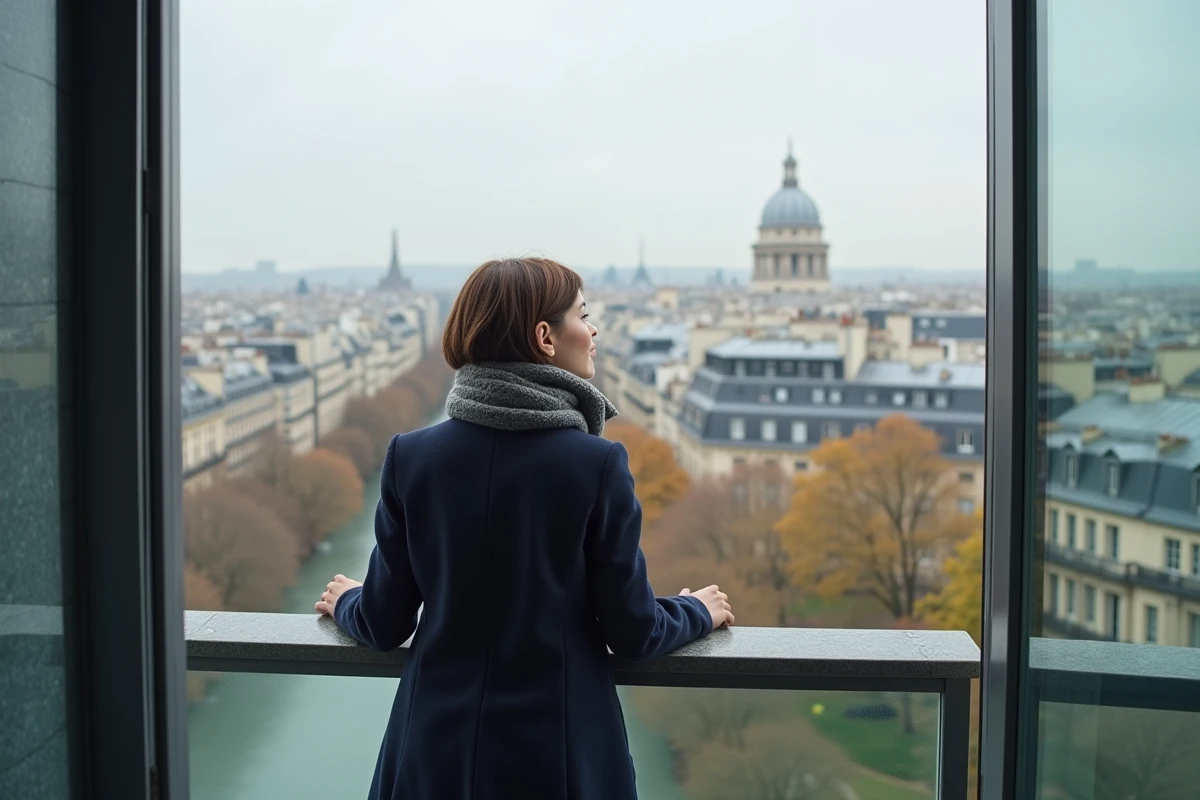
Observing Paris from above is to overturn one’s habits, to disturb one’s references. Suddenly, the City of Light unfolds all its complexity: contrasts of neighborhoods, intersecting paths, lines fleeing toward the horizon. The noise fades away. The Haussmannian plan reveals its design, the avenues radiate toward the Arc de Triomphe, the Seine winds, everything arranges itself in a logic that escapes the pedestrian.
The monuments, Eiffel Tower, Montmartre, Montparnasse Tower, compose an urban narrative. Only aerial shots can show this overarching story, this puzzle where each piece fits into a coherent whole.
Height imposes another perspective. At the top of the Eiffel Tower, at 276 meters, the capital sprawls, almost unreal. From Butte Montmartre and Sacré-Cœur, Paris reveals itself from an unexpected angle, where the density of buildings interacts with the green breaths of Buttes-Chaumont Park or André Citroën Park. Other viewpoints, often overlooked, Parc de Belleville, Butte Bergeyre, offer perspectives that classic tours neglect.
Choosing to access Paris from an airplane is also to reread the traces of the past. The overflights remind us how the Île de la Cité remains the heart of the urban layout, show the deliberate symmetry of the squares, highlight the modernity that has reached the outskirts. The Montparnasse Tower challenges the Eiffel Tower, La Défense pierces the skyline, all signs of the transformations of Paris.
This skyward gaze disrupts what we thought was established. The Seine quays become the backbone, the Haussmannian perspectives align, the slate roofs fragment the landscape. Paris, seen from above, expands the circle of its explorers to all those who want to understand the capital as you have never seen it.
What are the best spots and experiences to admire Paris from above?
Climbing to the top of the Eiffel Tower is to choose the most extreme perspective of the city. Up there, at 276 meters, Paris unfolds: the axis of Champ-de-Mars stretches toward La Défense, the Seine undulates, each neighborhood takes its color, the light reshapes the roofs. A little further north, Butte Montmartre and the forecourt of Sacré-Cœur dominate the capital, offering an urban tableau where time suspends its course. Passersby stop, artists set up their easels, and the city breathes in a unique atmosphere.
To appreciate the symmetry of the Haussmannian plan, nothing beats the observation deck of the Montparnasse Tower. The panorama faces the Eiffel Tower, the Seine carves its path, the monuments align up to the Louvre. More unexpectedly, the Balloon of André Citroën Park takes its visitors 150 meters into the air for a silent, almost suspended experience, where the view embraces everything from the Invalides to the Périphérique.
Some spots stand apart from the crowd: the Belvedere of Parc de Belleville, Butte Bergeyre, Buttes-Chaumont Park. Here, Paris offers itself differently, from sloping gardens or discreet terraces. On the grand boulevards, the rooftop terraces of Galeries Lafayette and Printemps Haussmann open wide panoramas over the Opéra Garnier, the Sacré-Cœur, and the vibrant density of the urban fabric.
For those who prefer more direct perspectives, the Pont de Bir-Hakeim offers a unique framing of the Eiffel Tower. Another option: linger on the terraces of Café Carlu or Café de l’Homme at Trocadéro, to observe the metropolis at any hour of the day or night. Here, the verticality gives Paris the appearance of a labyrinth, always to be guessed.
Dive into aerial Paris: photos, videos, and discoveries with drones
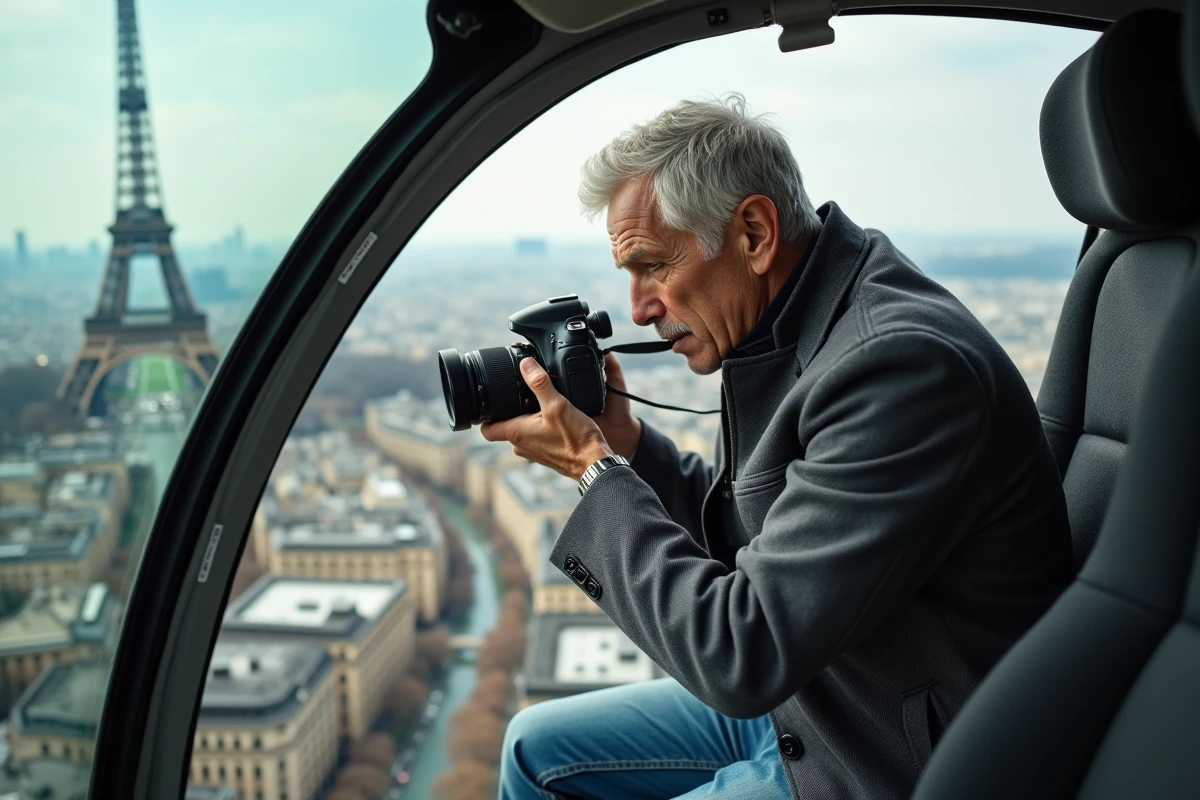
The drone’s eye transforms the capital into uncharted territory. On the screen, the City of Light articulates in lines, curves, and volumes. Aerial shots reveal the secret geometry of the boulevards, the Haussmannian chessboard, the sinuousness of the Seine, and the silhouette of the Eiffel Tower, a familiar beacon emerging in the landscape like an anchor point.
The aerial adventure is not new. In 1919, Jules Védrines dared the unthinkable: landing his plane on the roof of the Galeries Lafayette, confronting the vertical city against modernity. Today, exploration continues. Drone images and panoramic films circulate, shared on a large scale, offering the curious a renewed vision of Paris.
Some take the reconstruction further: Johann Perathoner creates 3D models of Paris, displayed in art galleries, revealing every detail of the city from the sky, with almost surgical precision. These new technologies enrich the understanding of the capital, paving the way for visual discoveries that were previously inaccessible.
Here is an overview of the different ways the city reveals itself today thanks to height:
- Aerial photographs: revealing historical axes, unprecedented perspectives.
- Immersive videos: immersion in verticality, flying over monuments, crossing rooftops and perched gardens.
- Digital models: detailed exploration, educational tool, and support for architects or urban planners.
The sky of Paris is no longer just a backdrop, but a field of exploration, narrative, and emotion. With each fresh gaze, the city reveals an unsuspected facet, and hints at, up there, all that remains to be discovered.