
Koh Samui attracts more and more foreign buyers each year, and not just for its beaches. The island in the Gulf of Thailand combines an accessible real estate market, strong rental demand, and a quality of life that appeals to retirees, expatriate families, and remote workers. Understanding what makes this market attractive also involves knowing its gray areas, particularly regarding land ownership and rental regulations.
Land Regulations in Koh Samui: What the Law Really Allows
Before discussing returns or quality of life, one question arises: can a foreigner really own property in Thailand? The short answer is yes, but under strict conditions.
A non-Thai can own a condominium unit in freehold, provided that the foreign ownership does not exceed the legal limit for the building. For villas and land, the situation is different. A foreigner cannot directly own land in Thailand. Two arrangements exist: the leasehold (generally for 30 years, renewable) and the establishment of a Thai company.
The second arrangement deserves special attention. Thai authorities are scrutinizing companies suspected of using nominee shareholders. Thai PBS reported that a specific investigation targeted businesses in Koh Samui, suspected of using local front shareholders to control land and long-term leases. The Ministry of Commerce had reported over 46,000 suspected companies nationwide as of May 2025.
This context has direct consequences for an investor: the chosen legal structure must be solid and verifiable, not simply validated by a local real estate agent. Consulting an independent lawyer specializing in Thai real estate law, separate from the seller, remains the most reliable precaution. To assess this real estate opportunity on Immobilier et Particuliers, one must first master this legal framework.
Short-Term Rentals in Koh Samui: Rental Yields and Legal Constraints
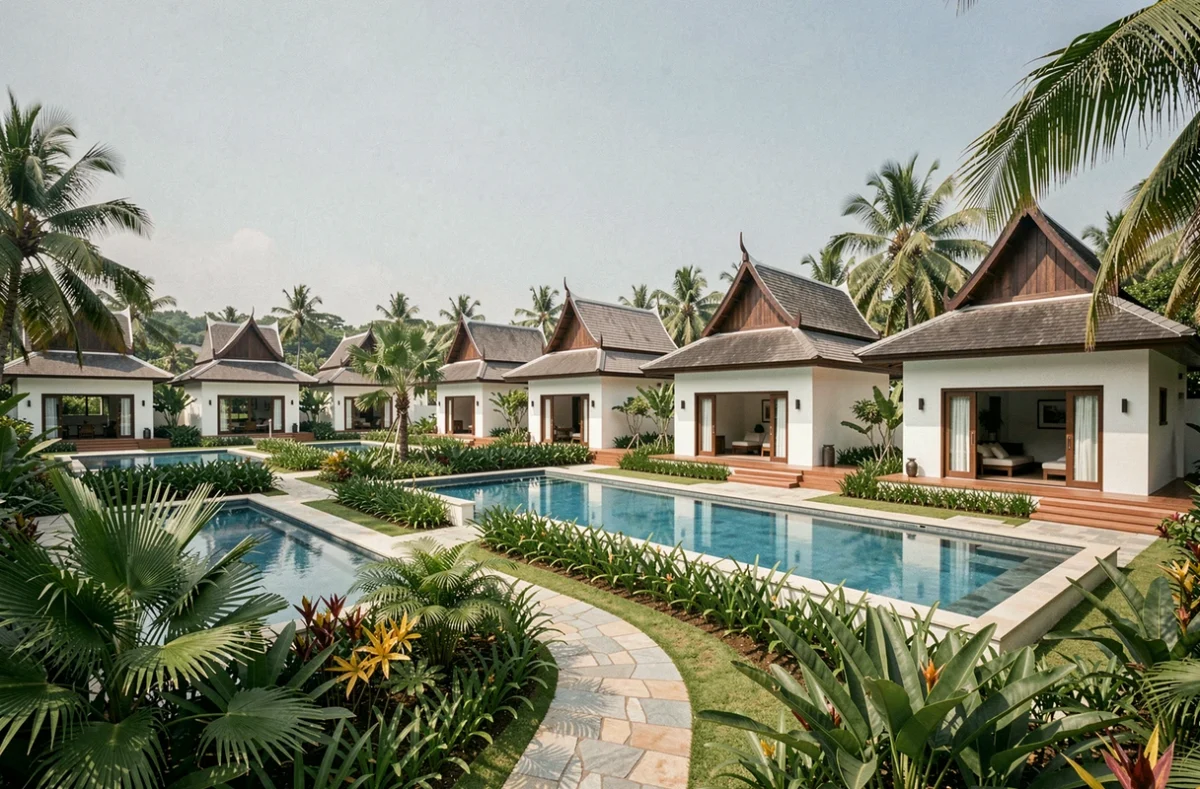
Why are so many investors interested in Koh Samui? The tourist rental demand, active for a large part of the year, suggests regular income. Villas with private pools and well-located condominiums rent for significantly higher rates than those in the traditional Thai rental market.
Rentals of less than 30 days fall under hotel activity in Thailand. Offering a property for nightly rental on a booking platform is not enough to be compliant. Two distinct elements must be verified:
- The legal regime applicable to the property: a hotel license may be required for any rental under 30 days, even in private accommodation.
- The condominium regulations: some condominiums explicitly prohibit short-term rentals, regardless of national legal frameworks.
- Operational management: entrusting the property to an experienced local manager simplifies compliance but incurs fees that reduce net returns.
An investor who bases their profitability calculations on nightly stays without verifying these points risks ending up with a property that is difficult to operate legally. The actual yield depends on the rental structure as much as on the location.
Areas and Types of Properties in Demand on the Island
Koh Samui is not a homogeneous market. The price per square meter and tenant profile vary by sector.
Seafront Villas and Panoramic Views
The high-end segment dominates the market. Villas located on the heights of Chaweng Noi, Bophut, or Maenam attract an international clientele willing to pay high rents for a view of the Gulf of Thailand. This segment offers the best gross rental income, but acquisition prices are also the highest on the island.
Condominiums in Lamai and Chaweng
For a more modest budget, condominiums in central tourist areas represent an entry point. Lamai and Chaweng concentrate the majority of tourist rental demand. The advantage of a condo for a foreigner: full ownership is possible without a corporate structure. The entry price remains significantly lower than that of a villa.
Properties Away from the Beaches
Properties located inland on the island are cheaper but target a different audience: resident expatriates, families, and remote workers staying for several months. Rental yields are more modest here, but tenant stability partially compensates for it.

Investing in Koh Samui in 2026: Game-Changing Factors
The real estate market in Koh Samui has evolved significantly in recent years. The island is no longer a confidential destination reserved for backpackers. Several factors are driving the current dynamics.
The island’s infrastructure has modernized: an international airport with direct connections, improved road networks, healthcare facilities, and international schools. These amenities reassure buyers considering semi-permanent residence or medium-term rental investments.
Demand no longer comes solely from beach tourism. Digital nomads and European retirees represent a growing share of tenants. This diversification reduces reliance on the high tourist season and smooths rental income throughout the year.
The cost of living on the island remains moderate compared to competing destinations like Bali or the Mediterranean coasts. Real estate prices in Koh Samui remain lower than those in Phuket for comparable services, leaving room for appreciation in the medium term.
- Enhanced air connectivity with Southeast Asia and the Middle East, broadening the pool of potential tenants.
- Established expatriate community, facilitating integration and access to services in English or French.
- Preserved natural environment compared to other more urbanized Thai islands, a selling point for high-end clientele.
The market is not without risks. Dependence on international tourism exposes rental income to geopolitical or health-related uncertainties. Regulatory changes regarding land ownership by foreigners remain a factor of uncertainty. A well-structured legal investment and geographical diversification on the island mitigate these uncertainties.
Koh Samui offers a value-for-money proposition that logically attracts investors, but the solidity of the project relies on the rigor of the legal structure and a deep understanding of the local market. The island rewards those who take the time to verify every detail before signing.