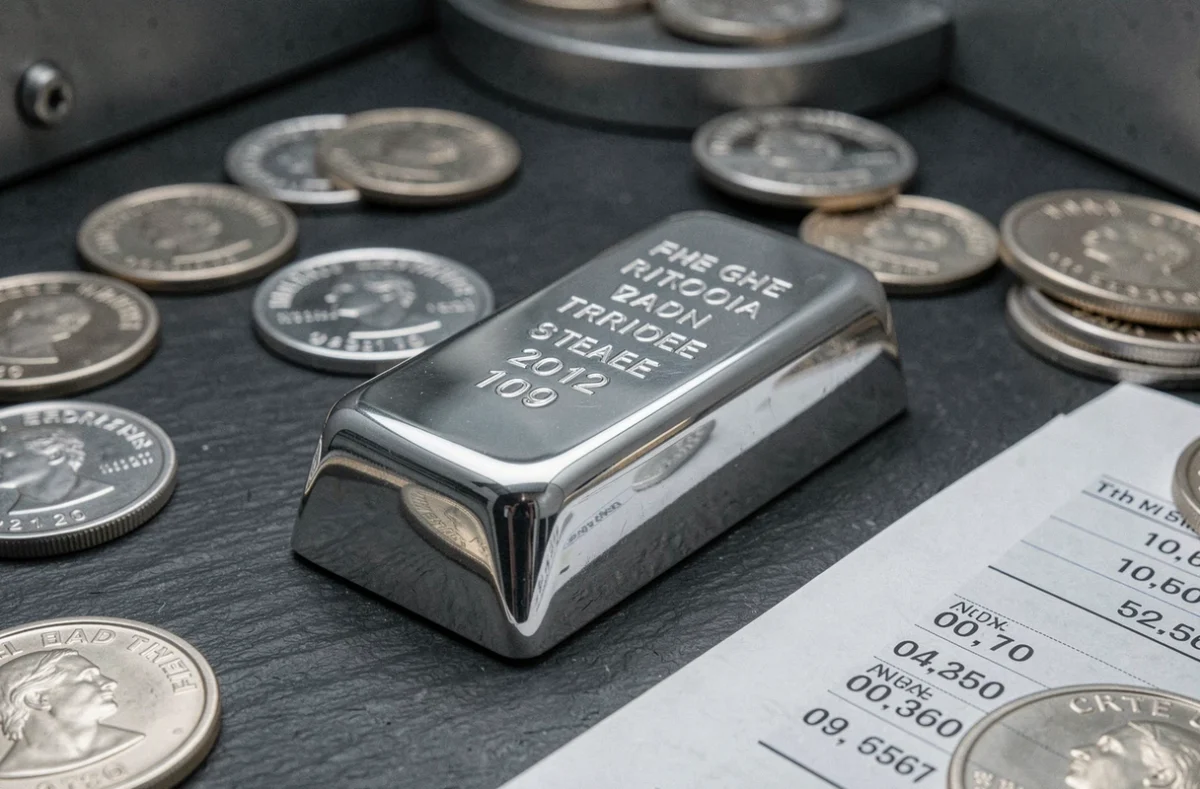
Platinum remains a unique metal in the world of commodities. Its pricing reflects less of an investment consensus than a fragile balance between a rigid mining supply and demand drivers pulling in opposite directions. Analyzing its price without dissecting these mechanisms is akin to commenting on a symptom without a diagnosis.
Concentration of Mining Supply and Rigidity of Platinum Production
Platinum production remains massively concentrated in South Africa. This geographical dependence creates a structural asymmetry: a price increase does not trigger a rapid supply increase. Mining constraints (depth of deposits, energy costs, instability of electrical supply) and long investment cycles hinder any elastic response from producers.
Recycling, particularly through used automotive catalysts, constitutes a distinct supply lever. Its volumes remain difficult to anticipate: estimates of growth vary significantly from one forecaster to another, which muddles market equilibrium projections.
Tracking the current platinum price therefore requires constantly cross-referencing primary production data and recycled metal flows, two variables whose correlation with the spot price is not linear.
Platinum Market Deficit: Why It Does Not Guarantee a Price Increase
The platinum market regularly operates in a state of physical deficit, a fact that fuels bullish headlines. The reality is more nuanced.

Assessments of the supply-demand balance vary among organizations, depending on how they account for investment and stocks. An annual deficit calculated by one analyst can coexist with a surplus according to another, simply because investment flows (ETFs, physical bars) and above-ground stocks are treated differently.
We observe that the platinum market reacts more to expectations than to published balances. An announced surplus has previously been enough to trigger a drop of over 40% from historical highs, as highlighted by the episode documented by StartupFortune. The opposite (a confirmed deficit followed by price stagnation) has also occurred.
- The physical balance (mining supply + recycling vs industrial demand + jewelry) does not capture movements of undeclared stocks.
- Investment flows (platinum ETFs, futures contracts) can absorb or amplify a deficit without the price reacting proportionally.
- Quarterly revisions by reference organizations sometimes change the sign of the balance, shifting from deficit to surplus during the year.
Platinum Demand in 2024: Automotive Catalysts, Hydrogen, and Jewelry
Platinum is used in automotive catalysts, the chemical industry, jewelry, and investment. These drivers evolve in different directions, making overall demand difficult to model.
Automotive demand remains the largest consumption segment. Platinum is used in the manufacture of catalytic converters, primarily for diesel vehicles. The transition to electric reduces this outlet in the long term, but the actual pace of substitution depends on public policies, fleet renewal, and the effective penetration of electric vehicles in each market.
Hydrogen represents a frequently cited growth relay. Fuel cells use platinum as a catalyst, and several industrial programs are increasing volumes. This segment remains marginal in absolute volume compared to traditional catalysts, but its growth trajectory is faster.
Jewelry, concentrated in the Asian market, provides a relatively stable demand base. Physical investment (coins, bars, ETFs) plays a counter-cyclical amplifying role: it can inflate demand in certain years and compress it in others.
Platinum and Palladium: Substitution Dynamics and Relative Prices
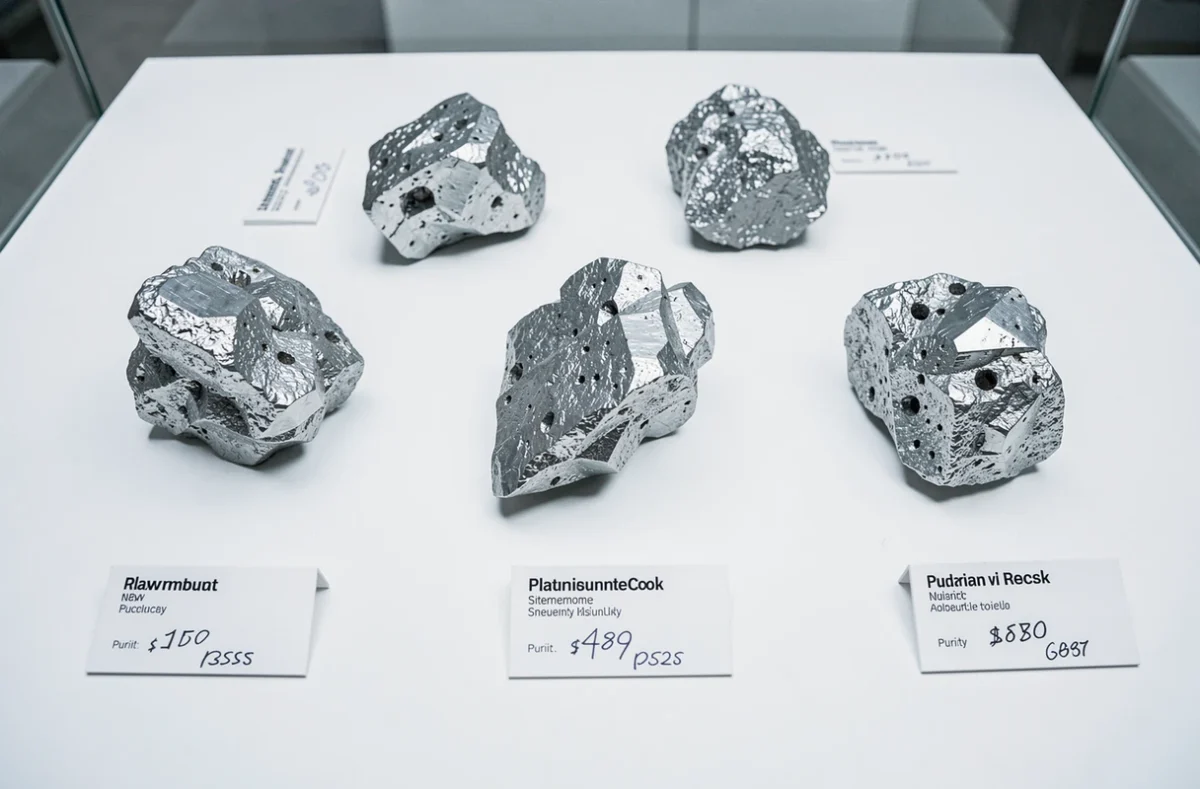
Platinum and palladium share similar catalytic properties. When the price gap between the two metals widens, automakers can substitute one for the other in the manufacture of catalysts. This substitution alters demand with a lag of several quarters, the time needed to adjust technical specifications and supply chains.
Palladium has long traded significantly above platinum, which has led some manufacturers to reintegrate platinum into their gasoline catalysts. This movement, initiated before 2024, remains gradual. It is not enough to absorb the entire potential surplus of palladium nor to fill the platinum deficit, but it helps to narrow the price gap between the two metals.
Platinum Price Outlook: What Forecasts Do Not Capture
Medium-term forecasts generally anticipate a continuation of the physical deficit, supported by pressured South African supply and stable industrial demand. South African production could even decline slightly if mine closures materialize in response to falling prices of platinum group metals.
- The main downside risk remains a slowdown in global automotive demand, coupled with a faster-than-expected acceleration of electrification.
- The upside risk hinges on a tightening of mining supply (closures, under-investment) combined with a quicker industrial adoption of hydrogen.
- The least predictable variable concerns investment flows: a renewed institutional interest in physical platinum could alter market balance within weeks.
Forecast models sometimes diverge on the very sign of the annual balance. This is a characteristic of the platinum market, whose size remains modest compared to that of gold. A relatively small volume of buying or selling can disproportionately move the price.
Platinum in 2024 is trading in an environment where physical fundamentals argue for price support, but where market mechanisms (stocks, ETFs, speculation) can temporarily neutralize this signal. It is a metal that rewards patience and penalizes simplistic readings of the supply-demand balance.