In the culinary world, precision is paramount, especially when it comes to measurements and volume conversions. Whether you are an experienced chef or a home cooking enthusiast, mastering the conversions between tablespoons, cups, fluid ounces, and milliliters can transform your culinary experiences. Mastering these basics ensures the success of your dishes, as recipes often hinge on a delicate balance between ingredients. Understanding how to effectively convert volumes is therefore an essential asset for any cook wishing to excel in the art of cooking.
Understanding Measurement Units and Their Conversion in Cooking
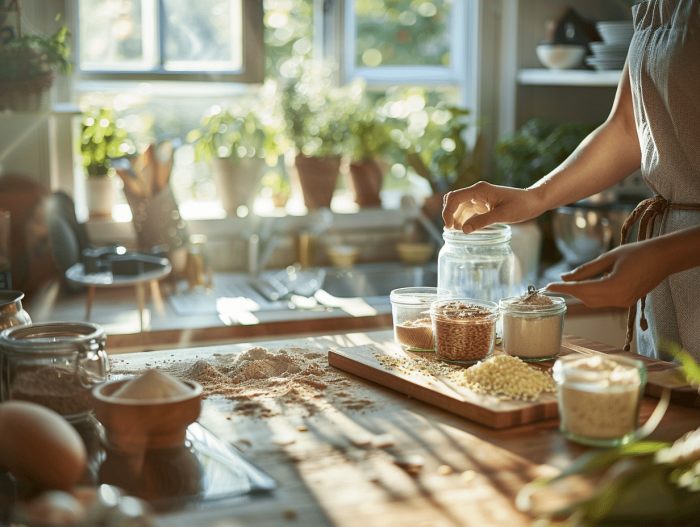
In professional catering, precision allows for no approximation and inevitably depends on the mastery of measurement units and conversions. Each recipe, whether it requires liquid measurements like tablespoons or teaspoons and cups, or dry measurements also assessed in cups, demands a rigorous understanding and application of the equivalences between different units. Weight measurements, on the other hand, are done with a kitchen scale, an equally essential tool for achieving consistent and reliable results.
The question of conversions becomes acute when addressing volumes in cooking. The use of a conversion chart proves to be an indispensable tool in professional kitchens, facilitating the transition from milliliters to centiliters, from cups to fluid ounces, or vice versa. For example, converting 150 mL to cL is easily done by knowing that one centiliter equals ten milliliters, so 150 mL is equivalent to 15 cL, a fundamental piece of information when adjusting the quantities in a recipe.
This conversion of units is not just a matter of numbers; it also requires an understanding of appropriate practices and tools. Using measuring cups and standardized measuring spoons ensures the consistency of measurements and, consequently, the coherence of culinary results. Documenting the conversions made during the preparation of dishes also allows for faithfully reproducing the flavors and textures that define a chef’s signature.
Techniques and Tips for Accurate Volume Conversions
Faced with the complexity of recipes and the diversity of measurement units, chefs and professional cooks rely on practical strategies for conversion. This includes transforming between weight and volume measurement units, or adjusting recipes to match a desired size or number of servings. Using experience and intuition remains a determining factor for adjusting quantities without compromising the quality of the dish. A Margherita pizza intended for 300 people can be recalculated for one person while maintaining the harmony of the original flavors and textures.
The tips for effective conversion lie in the consistency of the measurement units used and the investment in precise measuring tools. Using a measuring cup or standardized measuring spoons contributes to the reliability of conversions and thus to the regularity of preparations. Furthermore, systematically documenting the conversions used during preparation allows for reproducing the same proportions and ensuring the longevity of recipes.
Keep in mind that density is the key to conversion between volumes and masses. A liter of milk, for example, will not weigh the same as a liter of oil. The density of each ingredient must be considered when converting milliliters to grams or centiliters to grams. This is particularly relevant for liquid ingredients, whose mass can vary significantly depending on their composition.
Conversion is not a mere formality; it allows for flexibility in recipe preparation and ensures consistency in culinary results. The transition from milliliters to centiliters is done with the understanding that one centiliter equals ten milliliters. To convert effectively, follow the established conversions and use precise measuring tools. This guarantees consistency in dosages, a fundamental element for the balance of dishes and the satisfaction of the most discerning palates.