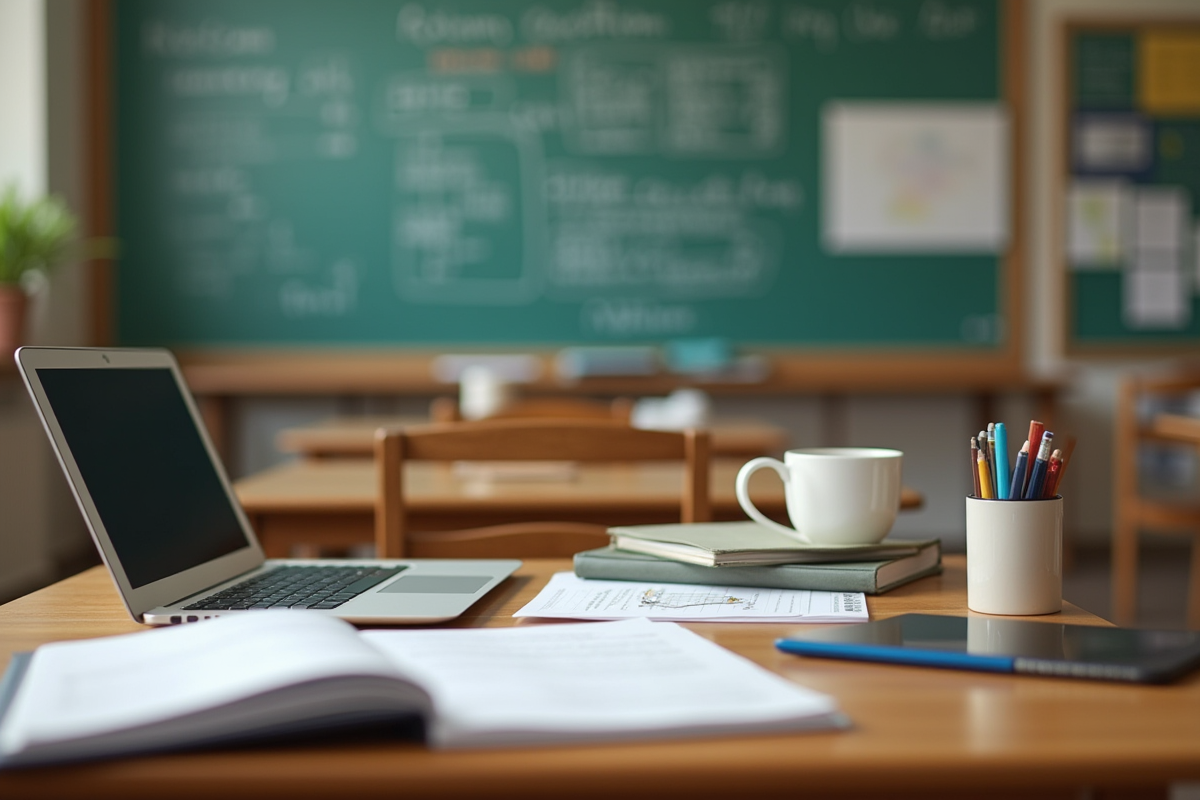
In a classroom, the organization of the teacher’s space plays a fundamental role in the effectiveness of teaching. A well-structured space not only maximizes students’ attention but also facilitates access to educational resources. With the evolution of technologies and educational practices, it becomes essential for teachers to rethink and optimize their work environment.
Various tips and tools can help transform a cluttered space into a fluid and functional workplace. For example, the use of modular furniture, well-placed shelves, and digital tools can make all the difference. The goal is to create an environment conducive to learning, where every element has its place and function.
Arranging the Physical Space of the Classroom
Optimizing the physical space of the classroom requires rethinking the layout of furniture and educational tools. The idea is to create an environment where each element contributes to the effectiveness of teaching.
Use of Modular Furniture
Modular furniture offers valuable flexibility:
- Height-adjustable tables and chairs
- Mobile bookshelves
- Multifunctional storage
These elements allow for quick adaptation of the space according to educational needs.
Optimization of Digital Resources
The integration of digital resources is essential for modernizing the teacher’s space. Tools like tablets, interactive boards, and online platforms facilitate access to educational content. In this context, IProf Créteil offers a detailed tutorial to optimize the use of your teaching space, a valuable resource for teachers looking to make the most of their digital environment.
Organization of Workspaces
A structured organization of workspaces maximizes efficiency. Consider the following points:
- Dedicated zones for specific activities (reading, practical work, group discussions)
- Accessible and well-labeled storage spaces
- Use of bulletin boards to centralize key information
The thoughtful distribution of work and storage areas not only facilitates classroom management but also enhances student engagement. By strategically structuring the space, teachers can create an environment conducive to learning and creativity.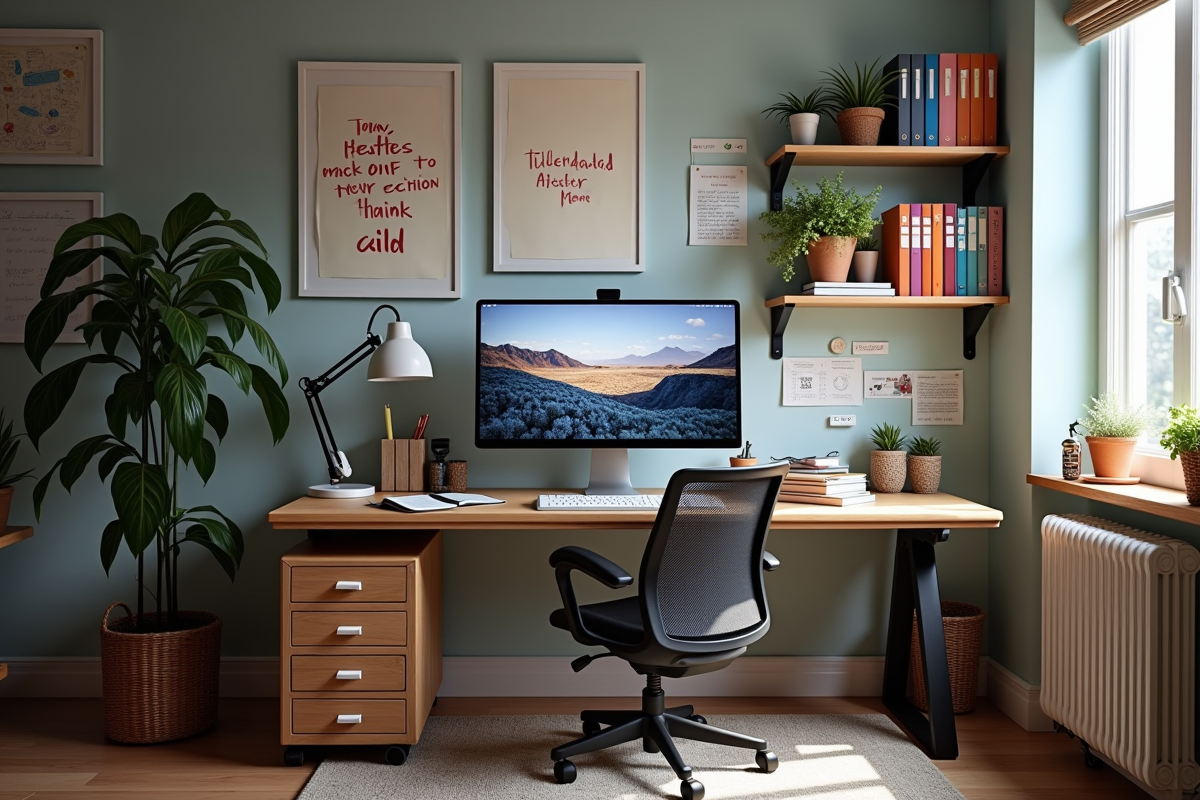
Using Digital Tools to Optimize Teaching
The use of digital tools is revolutionizing the pedagogical approach. They allow for diversifying teaching methods and making classes more interactive.
Interactive Boards and Educational Applications
Interactive boards, combined with educational applications, offer a multitude of possibilities:
- Dynamic display of multimedia content
- Real-time interactions with students
- Recording and sharing of lessons
Teachers can thus transform their classes into immersive experiences.
Class Management Platforms
Class management platforms, such as those offered by indiz.fr, allow for centralizing educational resources and facilitating communication with students and their families. Key features include:
- Distribution and collection of assignments online
- Tracking student progress
- Instant communication with parents
These tools help structure and organize administrative tasks, thus freeing up time for teaching.
Augmented Reality and Virtual Reality
Augmented reality (AR) and virtual reality (VR) open new pedagogical perspectives. They allow for:
- Simulating complex environments
- Offering immersive experiences
- Facilitating hands-on learning
These technologies make learning more concrete and interactive.
The integration of these digital tools requires adequate teacher training and suitable infrastructure. The benefits in terms of pedagogy and student engagement are undeniable.