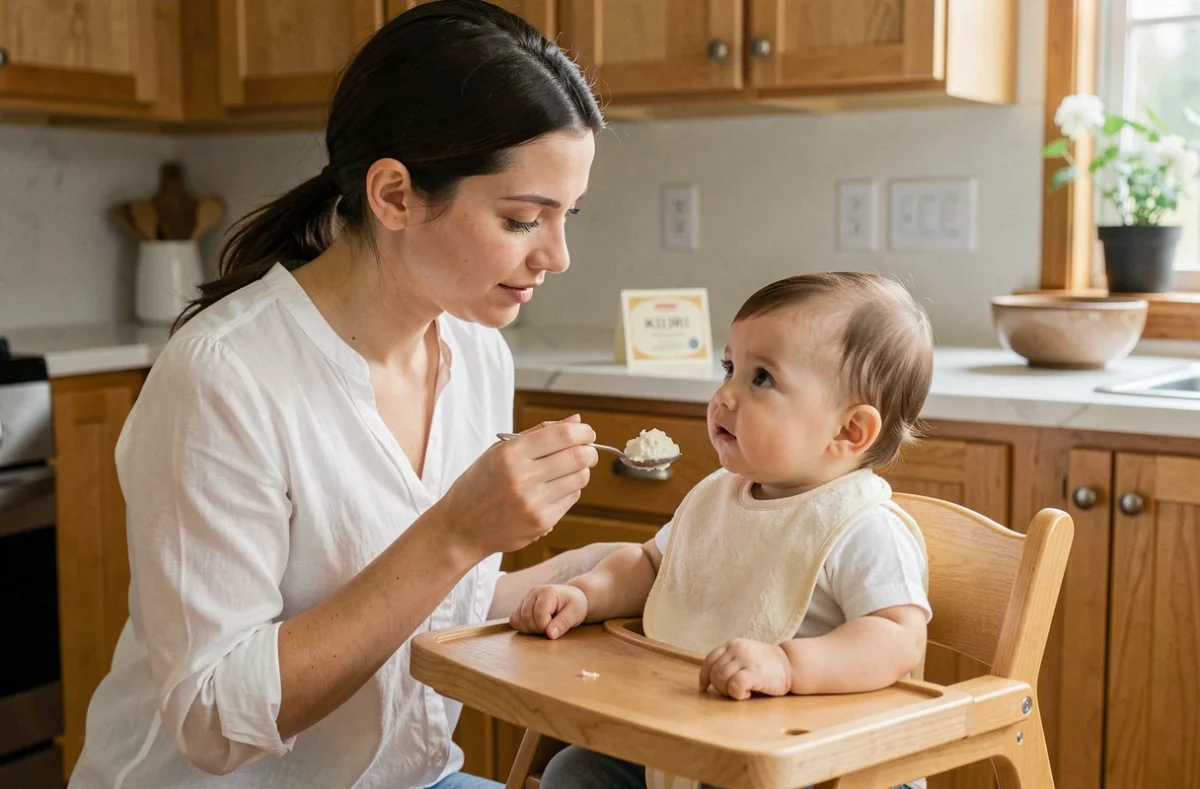
Kiri is one of the first cheeses that comes to mind when it’s time to enhance baby’s meals. Its melting texture, mild taste, and small individual portion are reassuring. But when does this cheese really find its place on a child’s plate during the food diversification process?
Why Kiri Stands Out from Other Melted Cheeses for Babies
Before discussing age, let’s look at what this cheese is made of. Kiri is made with pasteurized milk and cream, in a relatively short recipe. The pasteurization of milk eliminates pathogenic bacteria such as Listeria, making it suitable for little ones, unlike raw milk cheeses that are not recommended before the age of five.
This simple base distinguishes it from many commercial melted cheeses, which have longer ingredient lists and may contain additives to achieve their texture. For an infant whose kidneys are still immature, the composition of a cheese deserves attention.
Are you hesitating between Kiri and pressed cooked cheeses like Emmental or Comté? The latter are also suitable for diversification, but they need to be finely grated. Kiri can be easily mashed with a spoon, simplifying preparation.
To better understand the ideal age to give Kiri to baby, one must also consider the child’s developmental stage and not just their chronological age.
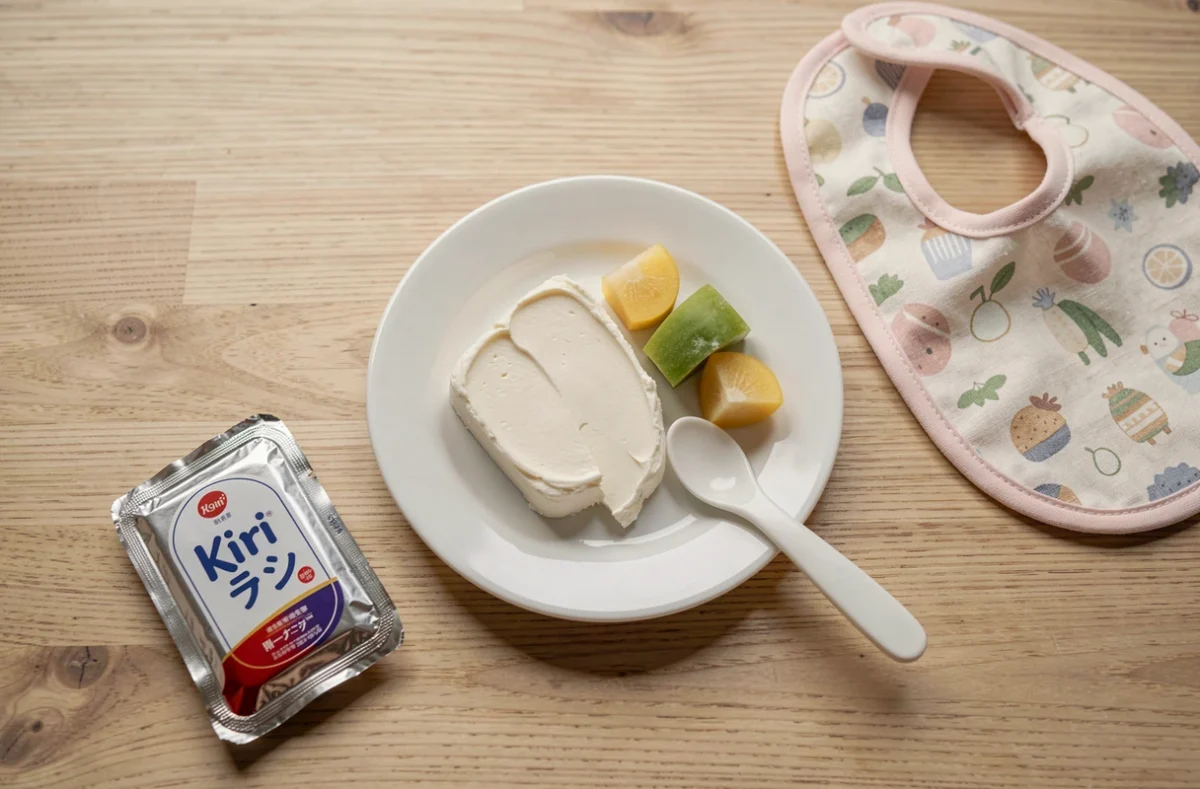
Kiri for Baby: From What Age and in What Form
Sources often vary between six and nine months. Food diversification generally begins around four to six months, and dairy products (yogurt, cheese) can be introduced as early as six months according to recommendations from Santé publique France.
So why does nine months come up so often? Because at this age, most babies manage semi-solid textures and small melting pieces better.
In practice, the presentation form makes all the difference:
- Between six and eight months, Kiri can be incorporated into a vegetable puree or mashed potatoes in small amounts to add flavor and calcium without altering the smooth texture that baby has mastered at this age.
- Around nine months, small melting pieces can be offered for the child to pick up on their own, provided they can sit up and start bringing food to their mouth.
- After twelve months, a whole portion (about one pack) can be given as part of a meal or as a snack.
A whole portion given too early, without supervision, can break off in a block. At six months, the chewing reflex is not yet established: Kiri should be mixed, never offered as is.
Calcium, Salt, and Fats: Reading the Composition Without Extrapolating
Kiri provides calcium, a valuable contribution to a varied meal. But cheese does not replace breast milk or infant formula before one year.
Until twelve months, milk remains the staple food. A baby who drinks their usual bottles or breastfeeds does not need cheese to meet their calcium needs. Kiri enriches the taste palette and prepares the transition to a diversified diet.
The Issue of Salt
Kiri contains salt in small amounts compared to many cheeses (Comté, Roquefort, feta). An infant’s kidneys filter sodium less effectively than an adult’s.
By offering a small portion of Kiri in a meal that is otherwise low in salt (homemade puree, steamed vegetables), the salt intake remains compatible with pediatric recommendations. Combining Kiri, ham, and bread in the same meal for an eight-month-old easily exceeds the reasonable threshold. It’s the overall meal that matters, not the isolated cheese.
Fats
Kiri is a fresh cheese enriched with cream. Its fat content remains moderate relative to the portion size. For a growing baby, fats play a fundamental role in brain development.
The fat in Kiri does not pose a nutritional problem at this age, provided that sources of cream are not multiplied in the same meal.

Kiri and Food Diversification: Three Common Mistakes to Avoid
Despite its simplicity, Kiri leads to some recurring missteps.
First situation: replacing a bottle with Kiri thinking “it’s milk”. Kiri contains milk, but not the same proportions of iron or the added vitamins found in infant formulas. A bottle of infant formula provides calibrated nutrients that cheese does not supply.
Second pitfall: offering Kiri as the first food for diversification. Recommendations suggest starting with vegetables (and sometimes fruits), then gradually expanding to proteins and dairy products. Introducing cheese too early in the schedule can reduce baby’s appetite for vegetables, whose taste is less appealing.
Last habit to watch out for: giving Kiri every day for convenience. Alternating with cottage cheese, fromage blanc, or grated Emmental allows for a variety of textures, tastes, and nutritional profiles. Kiri is a good candidate among others, not a unique food.
The introduction of Kiri follows a gradual approach, dictated by the child’s motor development and the overall balance of their meals. Between six months (mixed) and nine months (in small pieces), there is room for maneuver. The baby’s ability to mash food with their tongue and their interest in new flavors remain the best indicators, well before a fixed date on a calendar.