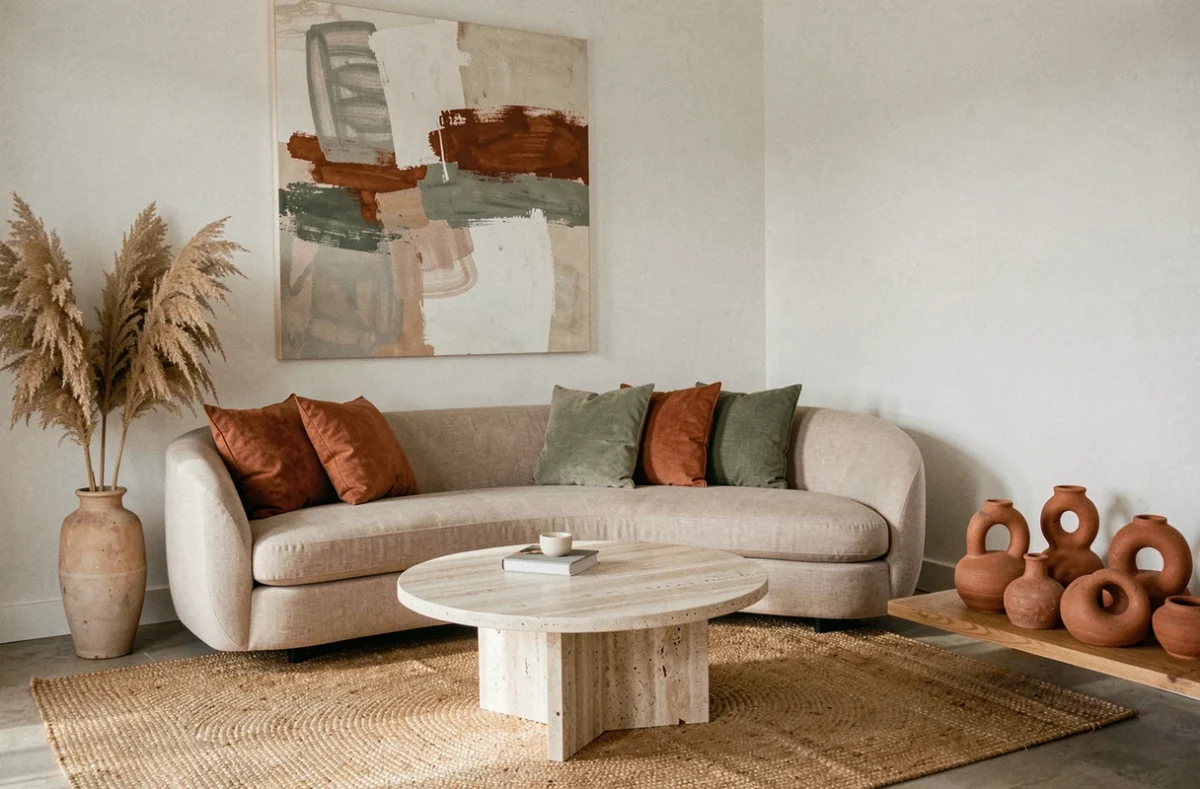
The 2024 decor trends are not just about color choices or furniture. Behind every design decision are questions about the chemical composition of materials, the actual durability of furniture, and indoor air quality. Transforming your interior with style requires understanding these parameters before choosing a shade or texture.
Emission labeling and air quality: the invisible filter of interior decor
Since September 1, 2013, construction and decoration products sold in France are subject to labeling of their volatile organic compound emissions, rated from A+ (very low emissions) to C (high emissions). This requirement applies to paints, varnishes, adhesives, and floor or wall coverings.
This classification serves as a concrete selection criterion for anyone renovating a living room, bedroom, or kitchen. A trendy matte paint in forest green or powder blue has different impacts on ambient air depending on whether it has an A+ or a B rating.
In practice, prioritizing products rated A+ and ensuring effective ventilation allows for enjoying updated decor without degrading the air quality of your living space. Decor made from raw materials or natural finishes, which are prominent in the 2024 trends, aligns well with this requirement, provided you check the label before purchasing. To explore decor ideas that incorporate these concerns, a useful resource: https://www.reves-de-deco.fr/.
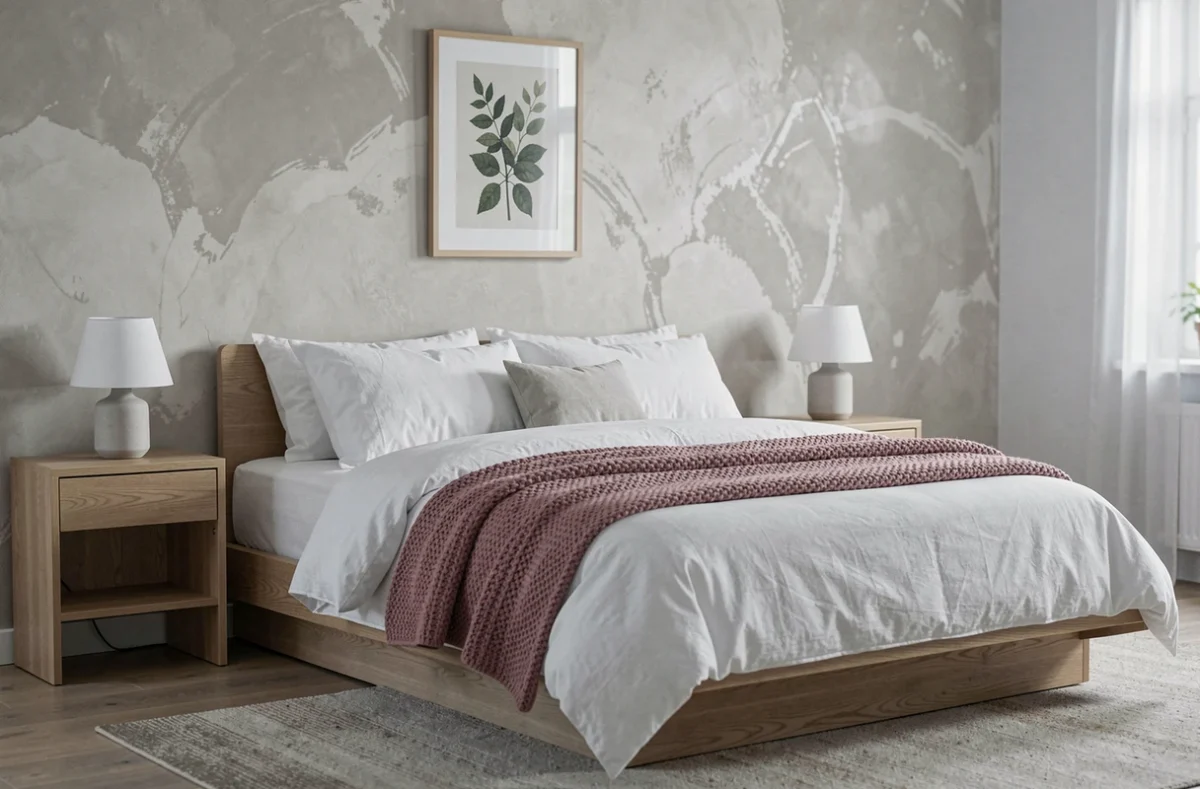
Upholstery and PFAS: what the 2025 law changes
Curtains, cushions, sofas, and textile coverings contribute to the identity of a room. The 2024 decor trends highlight rich textures (crumpled linen, corduroy, boucle wool) that dress an interior with minimal furniture.
Law No. 2025-188 of February 27, 2025, introduces a regulatory change regarding PFAS, these per- and polyfluoroalkyl substances used notably in stain-resistant and waterproof treatments for upholstery textiles. Choosing textiles untreated with PFAS becomes a criterion for sustainable decor, not just a health reflex.
In practice, this directs choices towards fabrics with clearly indicated compositions. Raw linen, untreated cotton, or natural wool meet both current aesthetic codes and this transparency requirement. Before purchasing a sofa or curtains for your living room, checking the technical sheet of the textile becomes as relevant as choosing its color.
Reuse and vintage furniture: the sustainable decor trend put to the test
Reuse has established itself as a strong axis of the 2024 decor trends. Hunting for a solid wood sideboard, restoring an antique dresser, or salvaging vintage lighting is no longer just about an embraced retro style.
An antique solid wood piece can be sanded, repaired, and restored, while a new piece made of particle board or melamine MDF is often more difficult to repair sustainably. The structural condition of the furniture, the reparability of its joints, and the type of wood determine its actual longevity.
To evaluate a second-hand piece of furniture, several points deserve attention:
- The strength of the joints (mortise and tenon, dowels, dovetails) which indicates a repairable piece, unlike staples or glue alone.
- The nature of the tabletop or facades: solid wood, wood veneer, or particle board veneer, three very different levels of durability.
- The absence of visible structural deformation (wobbly legs, sticking drawers, warped tops), which signals a problem of moisture or irreversible wear.
Integrating a reused piece into a contemporary interior brings a contrast of materials and a uniqueness that no mass-produced furniture can replicate. A 1970s rattan chair in a sage green-walled living room, or a patinated farmhouse table in a minimalist white kitchen, creates a style effect precisely because the object carries a visible history.
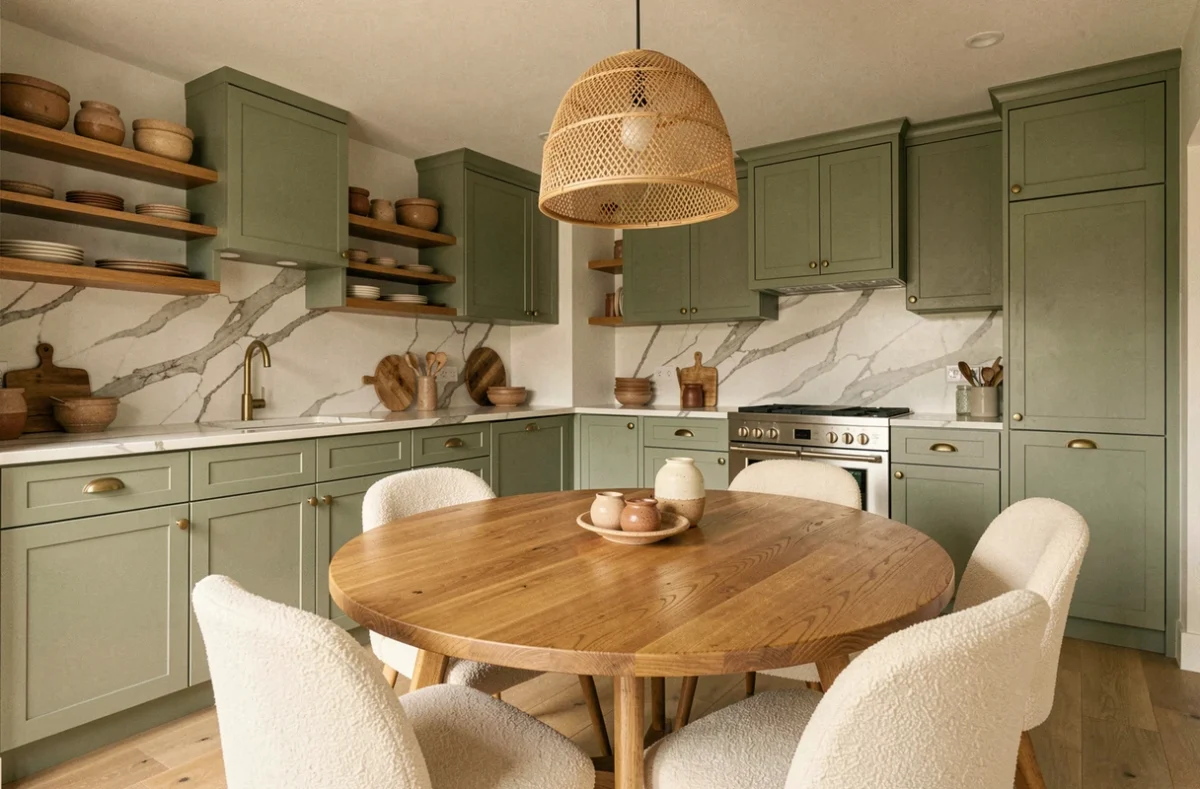
2024 color palette: combining trendy shades and technical constraints
The key colors of interior decoration in 2024 oscillate between soothing natural tones (ash beige, forest green, powder blue) and bold vibrant touches (deep pink, orange, red). The choice of a color also involves a choice of product and finish.
A dark shade like forest green generally requires more coats than an off-white to achieve an even finish. This means more product applied in the room, and therefore increased attention to emission labeling. On a bedroom or living room wall, the covered surface is significant enough that the emission class makes a measurable difference.
The combination of colors within the same space follows a few practical principles:
- Limit saturated shades to one or two walls, or to furniture elements, to avoid visual fatigue in living spaces.
- Pair a bright color (terracotta, Klein blue) with warm neutrals (linen, sand, taupe) that absorb intensity without dulling the energy of the pattern.
- Test the color under real lighting conditions, as the same shade changes radically between natural light and artificial lighting, especially in kitchens or bathrooms.
Geometric patterns and wall textures (lime plaster, wash, textured wallpaper) complement the palette by adding visual depth without multiplying colors. A textured wall in a neutral tone can have as much impact as a flat of bright color, with the advantage of aging better over time.
Decorating an interior in 2024 benefits from being thought of as a balancing act between aesthetics, material composition, and durability. The last point to keep in mind: a well-chosen decor product based on these three criteria remains relevant well beyond a season of trends.