
You are signing for an apartment that does not yet exist. The plans are attractive, the neighborhood promising, the price negotiated. But between the signing and the handing over of the keys, several months, sometimes several years, go by. During this period, the property in VEFA (sale in future state of completion) exposes the buyer to very real risks, often underestimated at the time of commitment.
Fund calls in VEFA: paying without being able to verify progress
In VEFA, the price of the property is not paid all at once. The developer sends staggered fund calls, aligned with stages of the construction site: foundations, waterproofing, completion. Legal ceilings frame these payments.
The trap lies in the actual control of progress. The buyer receives a certificate from the developer indicating that a certain stage has been reached. But checking the actual state of the site in person remains difficult for an individual. If the developer encounters financial difficulties, they may be tempted to trigger a fund call even though the work has not progressed as announced.
What should you do concretely? In case of doubt, it is recommended to immediately inform the bank that is financing the mortgage. The lending institution has a direct interest in suspending the release of funds if the construction site is stagnant. As detailed in real estate articles on Technique Habitat, this vigilance regarding fund calls is one of the first protective reflexes for the buyer.
Completion guarantee: what it covers and what it does not cover
The financial completion guarantee (GFA) is often presented as an absolute safety net. A guarantor (bank or insurer) commits to finance the completion of the construction if the developer defaults.
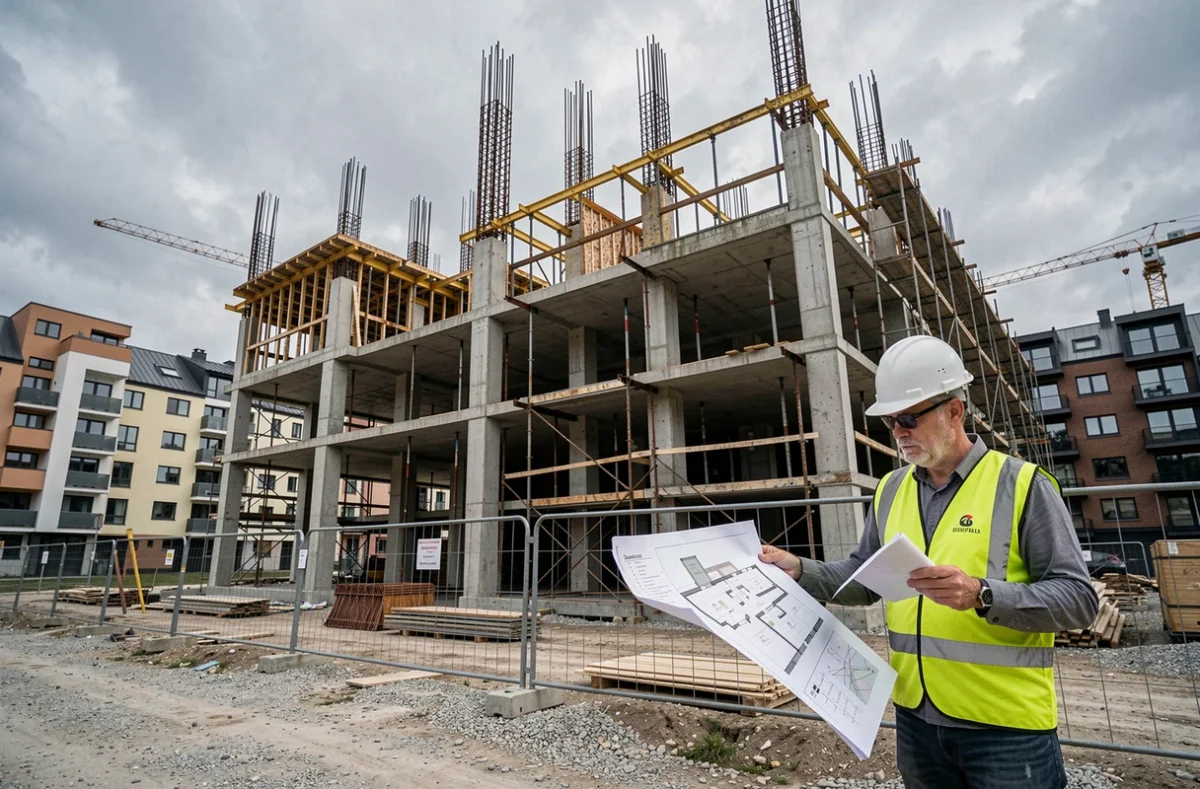
But this protection has a precise scope. The GFA guarantees the completion of the building, not the compensation for all damages. Specifically, if the developer goes bankrupt and the construction site is taken over by another party, the GFA finances the walls. It does not automatically cover:
- Late delivery penalties stipulated in the contract, which remain to be claimed from the defaulting developer (often in collective proceedings)
- Temporary relocation costs if you have already given notice to vacate your current rental
- Loss of rental income if the property was intended for rental investment
Distinguishing these two dimensions (completion of the property and compensation for consequences) avoids major disappointment in the event of a disaster.
Defects at the delivery of the VEFA property: a timeline for recourse not to be missed
On the day of delivery, the developer hands you the keys. You walk through the property and note visible defects in a report. This step seems simple. It hides a legal mechanism that many buyers discover too late.
The deadline for reporting apparent defects starts as soon as possession is taken. It does not coincide with the perfect completion guarantee, which binds the developer to the construction companies and runs from the acceptance of the work (a distinct step, prior to delivery).
In practice, the individual has one month after delivery to complete the list of reservations by registered letter. After this period, unreported visible defects become much more difficult to have addressed.
How to prepare for the delivery visit
Have you ever visited a new empty property, without furniture or personal lighting? Defects are hard to spot under these conditions. A few precautions can change the game:
- Bring the plans and the descriptive notice of the contract to compare each room with the developer’s commitments (surface area, materials, equipment)
- Systematically test electrical outlets, faucets, shutters, and ventilation systems, not just the visual aspect of the finishes
- Take timestamped photos of each anomaly, even minor ones, to build an actionable file
- Be accompanied by a building professional independent of the developer, capable of spotting technical defects invisible to a non-specialist
Each reservation not made on the day of delivery weakens your subsequent recourse. The delivery report is a legal document, not a mere formality.

VEFA reservation contract: clauses to read before signing with the notary
The reservation contract is signed in advance, sometimes in a sales office, with a deposit. This document foreshadows the authentic deed. It sets the price, the technical description, and the expected delivery date.
Two clauses deserve particular attention. The first concerns the technical description of the property, the only reference enforceable against the developer. 3D visuals, brochures, and models have no contractual value. Only the plans attached to the contract and the descriptive notice bind the developer regarding materials, surfaces, and equipment.
The second clause to watch out for concerns the conditions for price revision. Some contracts provide for indexing to the construction cost index. Between the reservation and delivery, this indexing can represent a significant increase in the final price. Check if the contract provides for a revision ceiling and under what conditions you can withdraw if the price exceeds a certain threshold.
The role of the notary in securing the project
The notary intervenes at the signing of the authentic sales deed. They verify the legal compliance of the contract, the existence of the completion guarantee, and the regularity of the building permit. But the notary does not check the quality of the construction or the financial solidity of the developer. Their role is legal, not technical.
Having the reservation contract reviewed by a lawyer specialized in construction law, in addition to the notary, helps identify unbalanced clauses before they become enforceable.
Buying in VEFA remains a mode of acquisition framed by solid legal guarantees. But these protections only work fully if the buyer knows their limits and respects the deadlines for recourse. The reservation contract, fund calls, and delivery are three moments where active vigilance makes the difference between a controlled project and a costly dispute.